


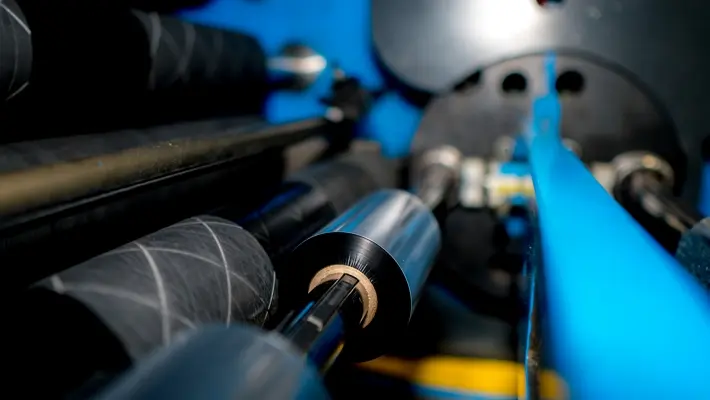
Printer Ribbon Tapes
Using the correct ribbon ensures your labels remain legible and intact, even under harsh environmental conditions.
-
Printer Type
Your printer requires a ribbon tailored to its specific technical characteristics.
-
Labelling Surface
Surfaces may be curved or rough, or exposed to chemical residues, water, and other substances.
-
Operating Environment
Consider environmental conditions—whether indoor or outdoor, exposed to direct sunlight, humid, or refrigerated.
-
Durability Requirements
Determine whether labels must withstand exposure to chemicals, oil, washing processes, or other harsh elements.
-
Intended Lifespan
Consider whether labels are temporary (for transport and shipping) or need to remain readable years after printing.
Evaluating these factors to choose the ideal ribbon can be complex. That is why Tecnipesa's technical team undergoes continuous training to advise you on selecting the right printer ribbons and labels.
PRINTER RIBBONS: WAX, WAX-RESIN, AND RESIN
Choosing the correct ribbon type requires evaluating label durability, application type, and the substrate material being printed on. Below is an overview of the different ribbon types and what to consider when making your selection.
This ribbon type is ideal for standard paper or card tags, as well as select low-gloss synthetic labels.
It is recommended for short-term applications, such as goods transport, where long-term durability is not required.
It provides a cost-effective option for thermal transfer printers.
Resin ribbons offer maximum durability, delivering long-lasting print quality across virtually any surface.
They withstand extreme temperatures, dust, water, and direct contact with aggressive chemicals. Resin ribbons are particularly suited to high-temperature industrial applications, including electronic component marking, chemical labelling, and rating plates.
This is the ideal choice for synthetic labels that demand extended durability in the most severe environments.
Wax-resin ribbons combine wax and resin formulations to deliver enhanced resistance and durability compared to standard wax ribbons.
They are primarily used on synthetic materials and paper labels that require an extended lifespan.
This ribbon type is well suited to warehouse labelling and product traceability, offering good resistance to smudging, friction, and moisture.
Which Ribbon Should You Choose?
A Ribbon for Every Need
| WAX RIBBON (wax ribbon) | WAX-RESIN RIBBON (mixed ribbon) | RESIN RIBBON (resin ribbon) | |
|---|---|---|---|
| Characteristics |
|
|
|
| RECOMMENDED FOR | |||
| Printing on uncoated paper | 🟢🟢🟢🟢🟢 | 🟢🟢🟢🟢⚪ | ⚪⚪⚪⚪⚪ |
| Printing on coated paper | 🟢🟢🟢🟢🟢 | 🟢🟢🟢🟢🟢 | 🟢🟢⚪⚪⚪ |
| Printing on synthetics | 🟢⚪⚪⚪⚪ | 🟢🟢🟢🟢⚪ | 🟢🟢🟢🟢🟢 |
| PRINT QUALITY | |||
| Low-temperature printing (0°C) | 🟢🟢🟢🟢🟢 | 🟢🟢🟢🟢🟢 | 🟢🟢🟢🟢🟢 |
| High-temperature printing (90°C) | 🟢⚪⚪⚪⚪ | 🟢🟢🟢🟢⚪ | 🟢🟢🟢🟢🟢 |
| Small fonts and fine characters | 🟢⚪⚪⚪⚪ | 🟢🟢🟢🟢🟢 | 🟢🟢🟢🟢🟢 |
| PRINTED LABEL DURABILITY | |||
| Friction and smudge resistance | 🟢⚪⚪⚪⚪ | 🟢🟢🟢🟢⚪ | 🟢🟢🟢🟢🟢 |
| Solvent, alcohol, petrol, and grease resistance | ⚪⚪⚪⚪⚪ | ⚪⚪⚪⚪⚪ | 🟢🟢⚪⚪⚪ |
| High-temperature resistance | 60°C | 140°F | 150°C | 302°F | 180°C | 356°F |
| PRINT PARAMETERS | |||
| Maximum print speed | 16 ips (400 mm/s) | 15 ips (380 mm/s) | 10 ips (250 mm/s) |
| Printhead heat setting | 🟢🟢⚪⚪⚪ | 🟢🟢🟢⚪⚪ | 🟢🟢🟢🟢⚪ |
| LABEL APPLICATIONS | |||
|
|
|
|
Not Sure Which Ribbon Your Printer Requires?
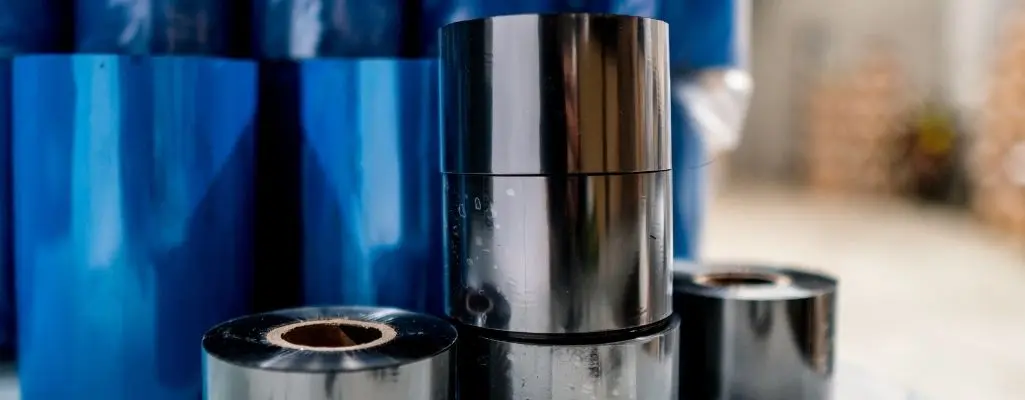
SELECTING THE OPTIMAL RIBBON FOR YOUR PRINTER
Once you have selected the appropriate ribbon grade based on label material and application, consider the target printer's specifications:
- Winding Direction (Ink Face): Depending on printer make and model, ribbons are wound Ink Out (CSI / Outside) or Ink In (CSO / Inside). Ink-out ribbons have the thermal ink coated on the outside of the roll, whereas ink-in ribbons have it on the inside.
- Core Size: The core is the tube around which the ribbon is wound. Depending on the printer, cores may be notched or unnotched, and come in standard diameters (e.g. 0.5-inch or 1-inch). Ensure you confirm your printer's core specifications before purchasing.
- Roll Length: Industrial printers accommodate larger capacity rolls, whereas desktop label printers usually accept smaller roll lengths. Check your printer's maximum roll diameter specifications to select the correct ribbon length.
Frequently Asked Questions About Thermal Ribbons
A thermal printer ribbon—also referred to as a thermal transfer ribbon or carbon ribbon—is a synthetic film coated with heat-sensitive ink. When heat is applied by the printer's thermal printhead, ink transfers onto the label surface to form the required image or barcode.
Thermal ribbons can print on virtually all label materials, provided the surface itself is not direct-thermal (heat-reactive). Ribbon rolls are available in various widths and lengths, as well as in a wide variety of colours to meet diverse operational needs.
Depending on the application, ribbons are formulated using different raw materials: pure wax (wax ribbon), pure resin (resin ribbon), or a hybrid formulation known as a wax-resin ribbon.
Thermal ribbons are used exclusively in thermal transfer printers. Direct thermal printers do not require a ribbon. Thermal transfer printers are widely deployed across logistics, manufacturing, healthcare, and food processing industries.
In logistics, thermal transfer printing is used for labelling shipping cartons, pallets, and parcels to ensure reliable identification and tracking throughout supply chains. In manufacturing, it enables product marking, inventory control, and supply chain traceability. In healthcare, thermal ribbons ensure legibility for specimen identification, pharmaceutical packaging, and medical device tracking.
Examples of thermal transfer printers that use thermal ribbons include the Zebra ZT510, Brother TD4420TN, SATO WS4, and Honeywell PD45S.
You may also be interested in
-
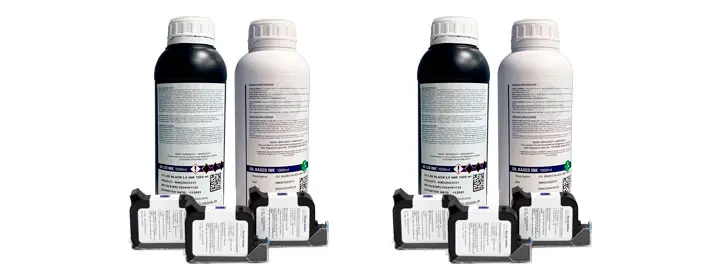
Industrial Printer Ink
We supply genuine industrial printer inks from leading brands, including UV inks, oil-based inks, and ink cartridges for UBS APPLINK and Epson ColorWorks inkjet printers. -
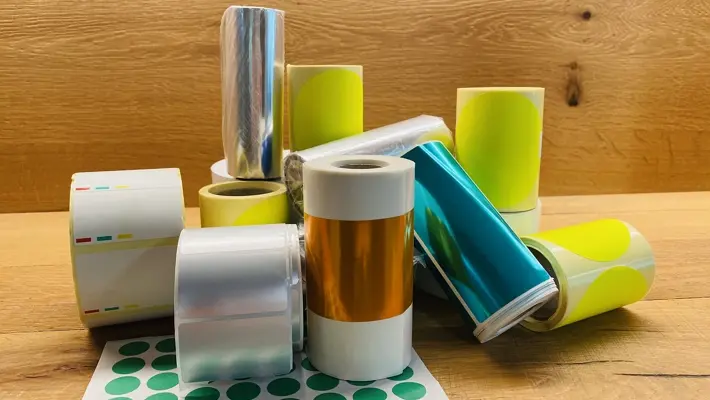
Custom Industrial Labels
We manufacture and supply industrial labels compatible with all major label printer brands. We provide expert advice to help you select the ideal label material for your specific application and storage environment.