


Product Traceability
In many industrial and logistics operations, traceability remains one of the most critical bottlenecks. When there is no reliable system to record what happens to each product or raw material, complex challenges arise: batches that cannot be isolated quickly, audits requiring hours of manual review, or inventories that fail to reflect reality.
If you currently find it difficult to track every batch, understand its history, or measure the time it spends in each phase of your process, we can help. We examine your operations and show you how to improve traceability without complicating your workflows.
How We Approach Traceability at Tecnipesa
For traceability to be truly effective, information must be captured automatically at every key checkpoint in the process. This means identifying products, raw materials, or assets from the moment they enter production until they are dispatched to the customer or end consumer.
At Tecnipesa, we work with automatic identification systems that record these movements across the entire product lifecycle. To achieve this, we combine identification technologies—such as RFID tags or barcodes—with industrial readers and integration software that connects the captured data with your ERP or warehouse management systems (WMS).
Traceability can be managed using either barcodes or RFID. The primary difference lies in the level of automation. With barcodes, every item must be scanned manually. With RFID, however, reading occurs automatically as items pass through a checkpoint, generating real-time records without manual intervention.
Key Benefits of the Solution
Greater accuracy in dispatch and order picking
Less time required to locate batches or products
Reduction in inventory shrinkage and errors
How a Product Traceability System Works
The foundation of traceability is the automatic identification of products, batches, or load units.
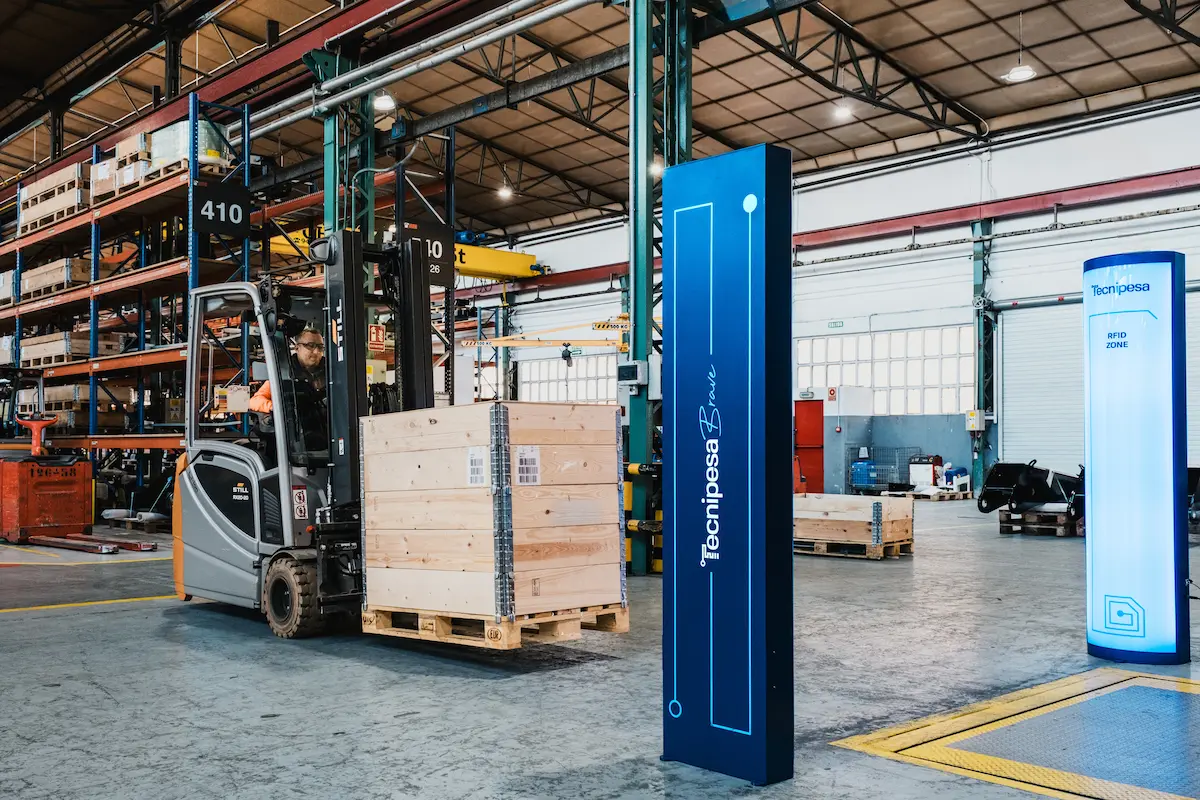
RFID technology enables the reading of multiple tags without direct line-of-sight and automatically records the movement of pallets, containers, or goods as they pass through a control point (Brave RFID gate). This allows inbound and outbound shipments to be verified in seconds and automates inventory counts in loading bays or warehouses.
Barcode systems capture data at various points across the process using industrial printers, fixed industrial scanners, or mobile computers. This technology remains standard in production environments or workflows where manual and sometimes repetitive unit identification is required.
For traceability to deliver operational value, captured data must integrate seamlessly with your core business management systems.
Through Tecnipesa Connect, information generated by RFID gates, RFID readers, or mobile computers is linked directly to your ERP, WMS, or host system. This integration layer manages business rules, standardises data from diverse sources, and ensures records are accurately maintained within corporate platforms.
Once identified, every product or batch can be tracked across all stages of production and logistics operations.
This allows automatic recording of product transformations, dwell times in specific zones, raw material consumption, and mixing or packaging operations. The system can also incorporate quality control checkpoints to validate parameters such as weight, dimensions, or other enterprise-defined criteria. If a deviation is detected, the system can generate automated alerts or quarantine the product to prevent it from moving further down the line.
Data captured during every movement keeps inventory records and product locations fully updated across the warehouse.
Using mobile computers or automated RFID identification systems, companies can conduct faster and more reliable cycle counts, locate stock in real time, and manage locations according to logistics criteria such as turnover, expiry dates, or storage conditions—enforcing rules like FEFO (first expired, first out) when required.

“At Pronutec, what we value most about Tecnipesa is the quality of their service, which has enabled us to optimize our processes.”
Other customers using our traceability solution












Specific Industry Challenges
 Automotive
Autonomous Inbound Receiving with RFID and Complex Kit Management in Real Time
Customer Challenge
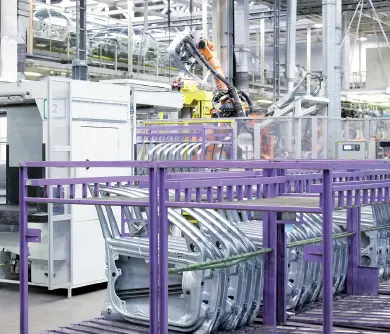
Complete control over manufacturing processes, managing complex kit preparation for vehicle assembly involving hundreds of components per assembly, instant processing of raw material receipts from multiple suppliers, maintaining an accurate real-time inventory, and ensuring zero production line stoppages due to stockouts.
Technical Solution Implemented by Tecnipesa
Unattended raw material receiving is achieved using an Autonomous Logistics solution powered by RFID technology. The Brave RFID gate automatically reads incoming pallets containing RFID-tagged items. Simultaneously, the Tecnipesa Connect middleware integrates with the customer's central system to transmit the data captured by the Brave gate, ensuring all records are updated instantaneously.
This approach eliminates manual processes and repetitive tasks, substantially reducing errors and providing immediate, real-time visibility into company stock levels.
 Healthcare
Precision Regulatory Identification: Integrated UV LED Printing for Moving Products
Customer Challenge
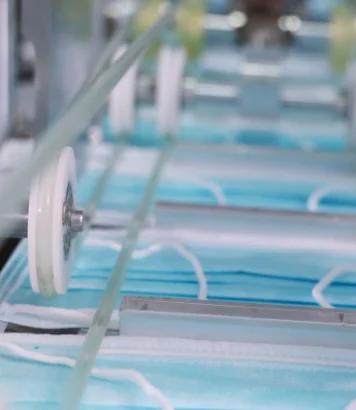
Accurate identification of medical devices directly on the production line, including batch numbers, client logos, and compliance with strict labelling regulations. Identification had to be performed on semi-finished products within a continuous, variable-speed production line. Furthermore, maintaining crisp, centred, and consistent print quality without interrupting production was essential.
Technical Solution Implemented by Tecnipesa
A high-resolution direct marking system featuring APLINK UV LED technology, easily integrated into the manufacturing machinery for continuous marking without halting the production line. The system incorporates an encoder that detects line speed and calculates exact product positioning to apply marks at the precise point, regardless of speed variations. Additionally, the equipment includes an integrated spare ink system that allows consumables to be replaced without stopping the process, guaranteeing high-quality printing of codes, text, and images across any surface.
 Food & Beverage
Automated Meat Traceability: Integrated RFID Weighing and Labelling with ERP Logging
Customer Challenge
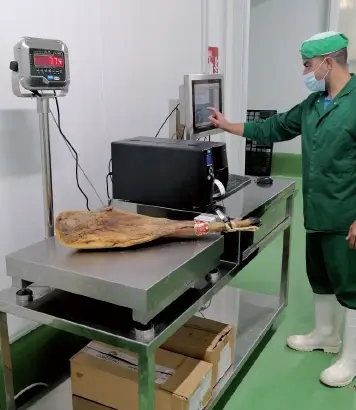
The company needed to improve product identification and traceability throughout the meat processing cycle, ensuring every piece was recorded with a unique identifier, precise weight, and all data required for end-to-end supply chain tracking. Existing labelling processes suffered from errors and lacked automation, while requiring robust industrial hardware capable of operating in demanding environments characterized by moisture and food-industry conditions.
Technical Solution Implemented by Tecnipesa
An RFID and barcode labelling solution that automates the identification of individual items directly within the production workflow. A custom stainless-steel workstation was engineered to integrate an industrial scale, display, industrial computer, label printer, and RFID reader. When an item is placed on the scale, the system automatically captures its weight, generates a unique code, and logs it in the ERP. The data is written to the item’s RFID chip while the corresponding label is printed, ensuring complete identification from the start of the process and precise control over every product across all manufacturing stages.
Products Comprising This Solution
Implementing a comprehensive traceability system requires a robust combination of data capture technology, software, and specialised industrial hardware:
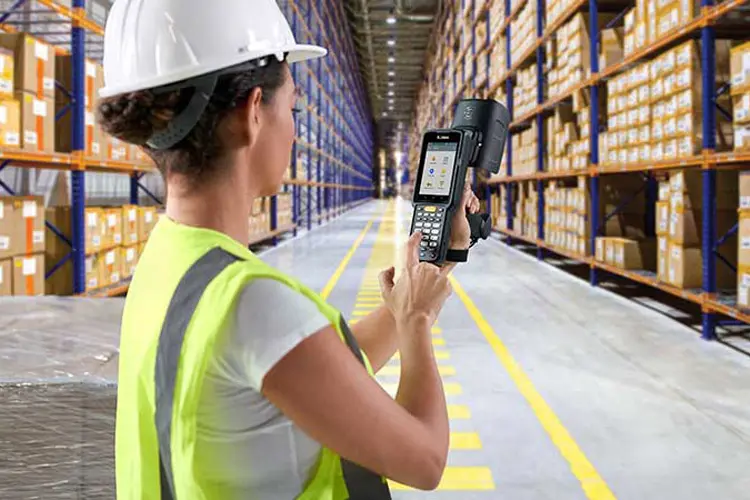
RFID Systems
RFID readers and Brave gates that secure loading and unloading operations, preventing product returns caused by internal errors. Brave operations run completely unattended. RFID terminals enable rapid daily inventories in as little as 15 minutes. Tags are specially adapted and tested for industrial, food, and healthcare environments.
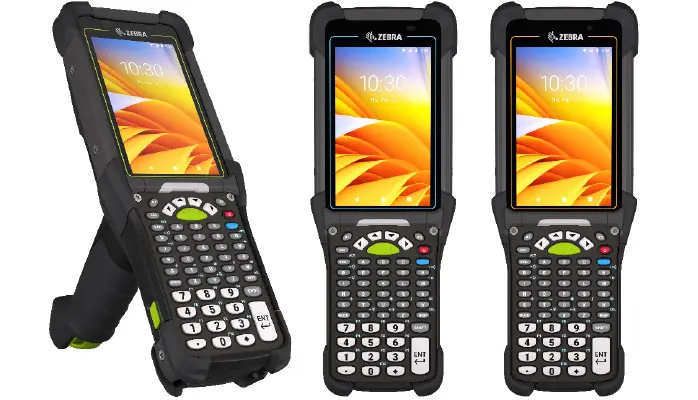
Mobile Computers
Ideal for complete warehouse management operations (picking, inventory control, put-away).
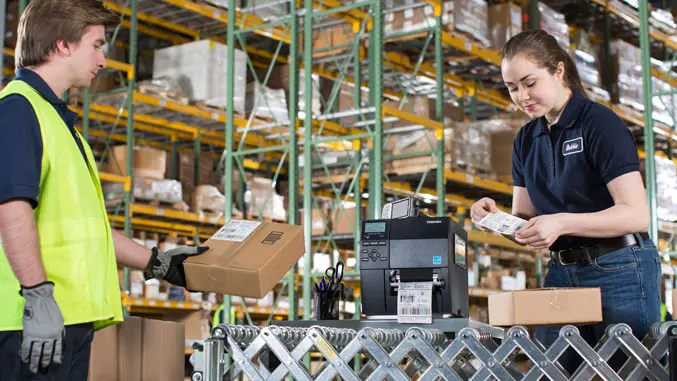
Industrial Label Printers and Thermal Transfer Ribbons
Where traceability starts—by applying a label to your product. Labelling can be direct thermal or thermal transfer, configured as manual or automated processes directly on the production line to match your operational requirements.
And Also...
Tecnipesa Connect middleware, RFID tags, consumables, RFID printers, barcode printers, industrial label applicators, RFID readers, mobile computers, industrial PCs and tablets, fixed industrial scanners, Brave RFID gates, RFID antennas, professional Wi-Fi installation services.
Frequently Asked Questions About Traceability
A comprehensive traceability system delivers total supply chain visibility by combining three complementary approaches that eliminate blind spots:
- Internal Traceability (Process Traceability): Tracks the movement and transformation of products and components within the company's own facilities. It is vital for optimising production, identifying bottlenecks, and maintaining quality control at every stage.
- Upward Traceability (Backward / Tracing): Identifies the exact origin of every component and raw material used. It is crucial for supplier management, source quality verification, and, above all, acting quickly and precisely when a defective batch is detected, isolating only the affected items.
- Downward Traceability (Forward / Tracking): Follows a product’s route after it leaves the facility until it reaches the end customer. It is the key to efficient logistics management, delivery optimisation, order status tracking, and executing rapid, precise product recalls.
-
Batch Traceability is ideal for mass-produced items with a low unit cost (e.g., fasteners, food products, chemicals), where units sharing identical production characteristics are grouped together. It is an efficient and cost-effective solution.
-
Unit-Level Traceability is essential for high-value items, serialized goods, or products requiring individual tracking due to regulatory mandates or warranties (e.g., machinery, automotive components, pharmaceuticals).
You may also be interested in
-

Inventory Management Solution
Complement your traceability system with stock management that eliminates stockouts and excesses, optimising picking and put-away with absolute precision through ERP/WMS integration.