


Integrated Weighing & Automated Production Line Labelling
Inaccurate product weights or shipping labels not only cost you money in regulatory penalties, but they also damage customer trust. If you are not automatically integrating exact weights with your management system, you are taking unnecessary risks and losing productivity with every pallet leaving your warehouse.
Does manual weighing slow down your production line?
At Tecnipesa, we offer a free 1-hour consultancy session to analyse how you can automate product or order weighing.
Tecnipesa's Automated Weighing Solution
We integrate weight data directly into your business workflow to eliminate data entry errors. Whether for checkweighing, generating orders based on real individual item weights, or high-speed variable-weight labelling, the system captures and communicates data without manual intervention.
How Does the Automated Weighing Solution Work?
-
Dynamic Weight Capture
The weighing equipment (platform scales, floor scales, or an in-line checkweigher) measures products with the precision required for your application (legal-for-trade or internal), in compliance with industry regulations.
-
Data Processing and Validation
The control software instantly compares the captured weight against pre-defined tolerance limits (such as tare weight, net weight, or legal ranges).
-
Bidirectional Integration
Weight data is transmitted automatically and in real time to your ERP, WMS, or MES, preventing manual data entry. The system also receives information (such as item, batch, or customer data) from the ERP for labelling or sorting tasks.
-
Automated Action
The system executes programmed actions, such as:
◦ Printing a Print & Apply label featuring the variable weight and barcode.
◦ Product sorting (rejection or diversion).
◦ Recording the pick or order in your management system.
◦ And more.
Key Benefits of Our Solution
Higher production line speed
Fewer inventory errors
Traceability of item weights linked to batches or orders
Weighing Solution Features
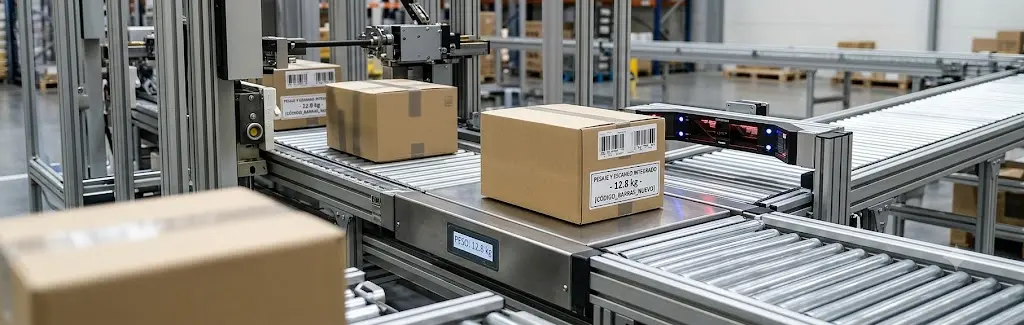
On-the-move weighing for high-speed lines without stoppages.
- In-Line Weight Verification: Ensures compliance with legal and quality tolerances in real time. Systems weigh products in motion to verify they fall within pre-set legal or quality thresholds.
- Overweight and Underweight Control: Immediate detection of defective units and automatic line rejection to prevent incomplete packages from reaching customers.
- OEE and Statistical Reporting: Automatic data collection to detect line inefficiencies and analyse production weight distribution for overall equipment effectiveness (OEE) analysis.
Weight accuracy translated into clear, legible, and perfectly adhered labels in any orientation.
- Variable Data Printing: Generation of labels including exact weights, dates, batches, barcodes, and nutritional or ingredient information.
- Labelling Systems: Automatic application (Print & Apply) to any face of a package, ensuring labels always match the weighed product.
Industrial scales form the backbone of any robust weighing system, built to withstand the harshest environments.
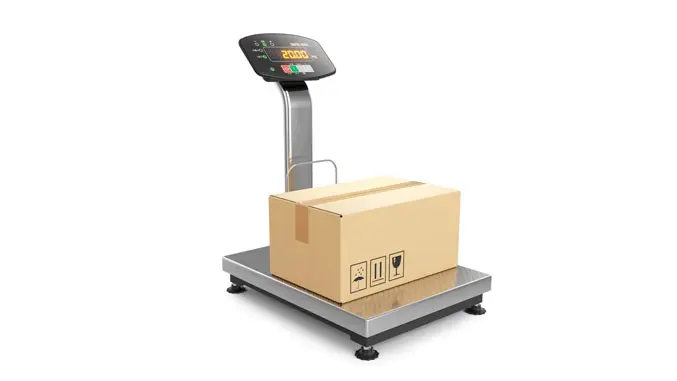
- Floor and Platform Scales: Rugged equipment for static weighing of pallets and heavy loads, feeding data directly into your dispatch system. Integrates seamlessly with dispatch or goods-in management software.
- Bench Scales: Designed for quality control and component verification at picking stations, connected directly to your PC or terminal to eliminate manual data logging and handle small packaging verification.
- Programmable Terminals and Indicators: Interfaces guiding operators through formulation processes or stock control, acting as a direct bridge to your ERP or WMS. Central control units allow specific workflows (such as recipe weighing or gravity-based stock control) to be programmed while serving as communication interfaces with ERP and WMS platforms.
True automation lies in the ability to share information. Our systems deliver complete connectivity.
- ERP/WMS/MES Integration: Seamless bidirectional connection, eliminating human error and packing list discrepancies.
- Weighing Management Software: Platforms centralising control across all factory scales and labellers, enabling remote management and consolidated plant-wide data from a single dashboard.
Other customers using our automatic weighing solution



Sector-Specific Challenges
 Food and Beverage
Legal weight control and allergen management: integration of MID checkweighers into production lines.
Specific Need:
Strict compliance with nominal weight legislation and allergen labelling.
Proposed Technical Solution:
Installation of a MID-certified dynamic checkweigher to guarantee legal weights, with direct integration into the production line labelling system for nutritional compliance.
 Logistics and E-Commerce
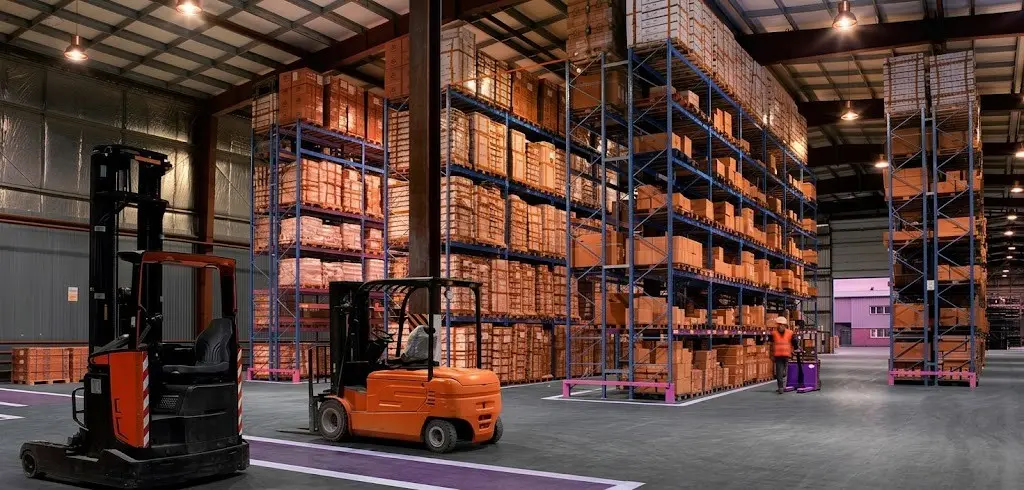
Order weight validation: WMS integration for agile and precise outbound logistics.
Specific Need:
Rapid validation of order composition (picking) and shipping cost calculation.
Proposed Technical Solution:
Low-profile platform scale integrated with the WMS. The system validates the actual package weight against the theoretical order weight, clearing it for dispatch if verified.
 Healthcare
Error-free formulations: guided precision dispensing and batch-level stock control.
Specific Need:
Precise component dispensing in formulations and raw material inventory control by batch.
Proposed Technical Solution:
High-capacity floor scale connected to a programmable terminal. Operators follow a guided weighing procedure (formulations) that automatically logs each ingredient's weight into the recipe management software.

Frequently Asked Questions on Automated In-Line Weighing and Labelling
This depends entirely on your production speed:
- Dynamic Weighing (Checkweigher): Necessary if you need to process upwards of 20–30 products per minute without stopping the line. Essential for legal compliance in prepackaged goods.
- Static Weighing: Suitable for spot-check quality control, heavy load (pallet) weighing, or formulation processes that require operator intervention and validation.
Not when using the appropriate communication architecture. We integrate scales with SAP, Oracle, or Microsoft Dynamics via middleware or APIs that ensure real-time bidirectional communication. This allows certified weights to upload to your system and packing orders to download to the line automatically. Digitising data eliminates 100% of manual transcription errors, ensuring every delivery note matches the physical contents of the package.
Preventative maintenance and ENAC-certified calibration are mandatory to comply with metrological regulations. In demanding industrial environments, the use of stainless steel and IP69K-rated load cells reduces breakdown-related downtime by 30%. A well-maintained system not only extends operational lifespan beyond 10 years, but also prevents financial losses caused by overweighting outside established safety margins.
You may also be interested in
-
In-Line Labelling and Coding
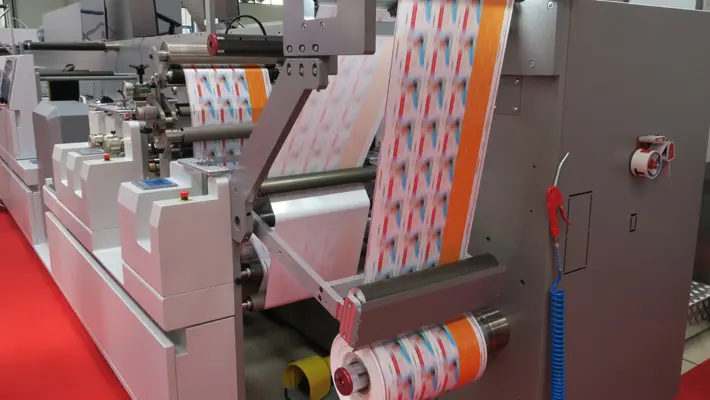
Explore the features of our industrial labelling, coding, and marking systems. -
Industrial PCs
Industrial computers built for all sectors: rugged, durable, and perfectly adapted to your production line. -
Product Traceability Solutions
Discover our traceability solution connecting marking, weighing, and vision data to build a digital history for every product—essential for meeting rigorous regulations.