


RFID Smart Labels & Tags
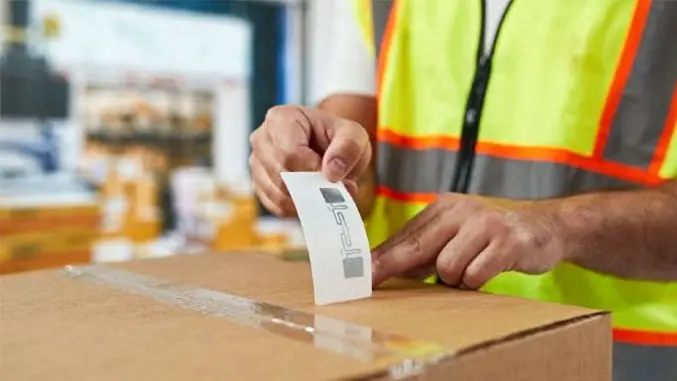
RFID labels are smart labels that store data to be transmitted via radio frequency to RFID readers or gates.
Thanks to their radio-frequency technology, they offer a very high level of reliability, minimising errors in data capture, stock control and order management
What are RFID tags and what are they used for?
These labels, also known as RFID Tags or Smart Labels, communicate with RFID readers or scanners to identify a specific product. In addition, each package marked with an RFID label has a unique code that allows it to be identified without errors and without requiring line of sight between the labels and RFID scanners.
Thanks to these characteristics, RFID labels are a highly useful tool for automating activities such as inventory management or warehouse goods receiving and dispatch. RFID tags also increase efficiency and security across the supply chain and improve logistics traceability by enabling the tracking of your company's assets once they leave your warehouse.
ADVANTAGES OF RFID LABELS
RFID tags or labels offer advantages that no other type of label can provide:
-
Each product labelled with RFID has a unique code for identification.
-
Enables simultaneous multi-product reading.
-
Data reading is faster, more efficient, and more secure.
-
Reduces distribution and production costs.
Types of RFID labels
At Tecnipesa, we offer all types of labels. You can request:
- RFID tags that are active, semi-active, or passive.
- Smart labels with LF, HF, NFC, UHF, or sensors.
- Customised labels for any application you need: industrial, food, chemical products, etc.
How do you know which labels you need?
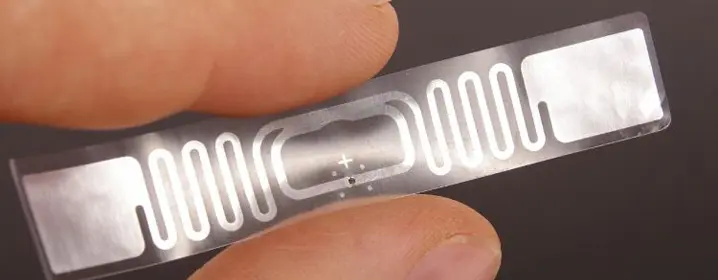
The most common way to categorise the different types of RFID tags is according to their technology or frequency. Likewise, read range and read speed also depend on frequency.
| RFID Label Type | Frequency | Range and Speed | Interference | Applications |
|---|---|---|---|---|
| Low Frequency (LF) | 30 - 300 kHz | Approximately 10 cm and slow read speed | High resistance to interference. | Access control or traceability, though being gradually replaced by HF labels |
| High Frequency (HF) | 3 - 30 MHz | 10 cm - 1 metre and medium read speed | Moderate resistance to interference | Tickets, personnel identification, card payments, automated warehouse systems, or data transfer |
| Near Field Communication (NFC) | 13.56 MHz | 10 cm - 1 metre and medium read speed | Moderate resistance to interference | Payments and data transfer |
| Ultra-High Frequency (UHF) | 300 MHz - 3 GHz | Up to 12 metres and high read speed | Highly sensitive to interference* | From manufacturing to the end user in applications such as retail, pharmaceutical, or manufacturing and transport |
*Thanks to innovations in design and materials, high-performance tags are manufactured for complex environments.
Unsure which RFID label to request?
RFID LABELS BY APPLICATION
General-Purpose RFID Labels
RFID Labels for Complex Environments: The Metal Challenge
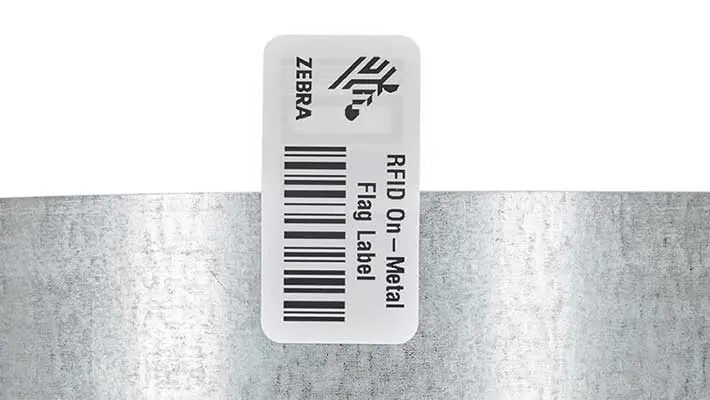
Sometimes, metal surfaces reflect and absorb radio frequency waves, causing interference that prevents correct and reliable reading of standard labels.
To overcome this obstacle, we offer on-metal RFID labels specifically designed to perform optimally in direct contact with metal surfaces. They enable error-free traceability for critical assets such as:
- Metal containers and cages in logistics and warehouses.
- Tools, dies, and tooling in production plants.
- IT assets and servers in data centres.
- Heavy machinery and components in the construction or automotive sectors.
OTHER EXAMPLES OF RFID LABEL USAGE

Industrial RFID Labels
Extremely robust labels capable of withstanding the harshest conditions, while also integrating an RFID chip or inlay.
These labels are specially designed to withstand sudden temperature changes or identify long-life products.
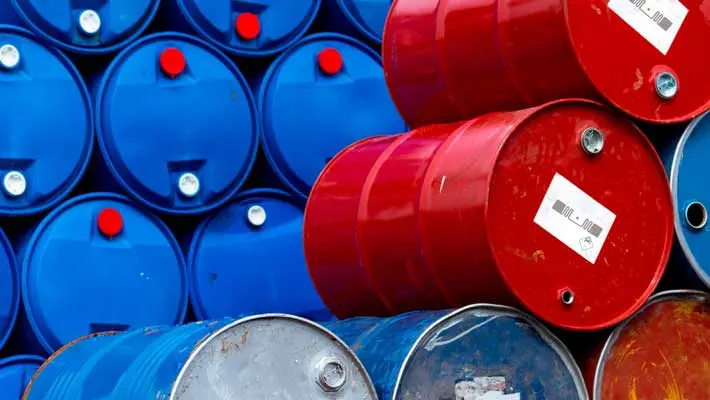
RFID Labels for Chemical Products
Specially designed for chemical and pharmaceutical environments where labels and RFID chips may come into direct contact with external chemical agents.
Enables reading of the embedded inlay despite contact with liquids.

RFID Labels for Apparel
Ideal RFID labels for garments that must endure high-wear processes such as industrial washing and ironing.
They consist of an inlay or RFID chip inserted into polyamide or similar materials.
These labels help prevent loss and theft while protecting the brand against counterfeiting.

RFID Labels for Supermarkets
RFID labels prepared to comply with food safety regulations.
They offer useful information such as best-before dates, packaging and production batches, registration details, etc.
The most suitable labels for the food industry during food preparation, packaging, and storage processes.

RFID Hard Tags and Cable Ties
A rigid component, usually made of plastic, with an encapsulated RFID chip inside. Manufactured in various sizes, they generally do not use adhesives.
Designed for anti-theft applications and processes requiring high durability against impacts, sudden temperature changes, or chemical abrasion.
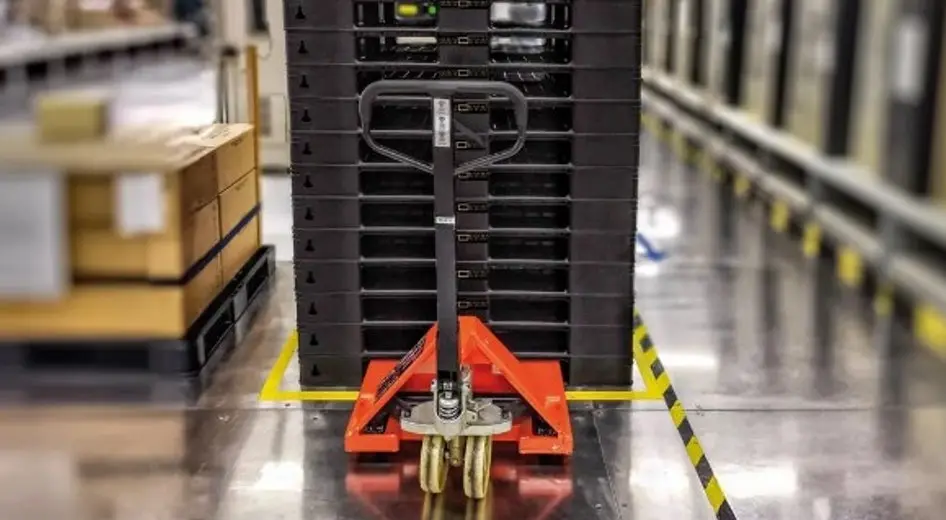
RFID Tags in Logistics
Warehouses and logistics operations demand greater agility and fewer errors every day.
Smart labels streamline warehouse goods receiving and dispatch, facilitating traceability at every stage of the logistics chain.
Combined with a WMS, RFID tags offer the capability to monitor stock in real time.
Frequently Asked Questions about RFID Labels
Information is written to the label's chip using a specific device known as an RFID encoder or programmer, which also functions as a reader. This process is managed via software that allows you to write, rewrite, or even lock data according to your application requirements.
At Tecnipesa, we provide a complete solution, including the recording hardware and software necessary for your team to manage labels autonomously.
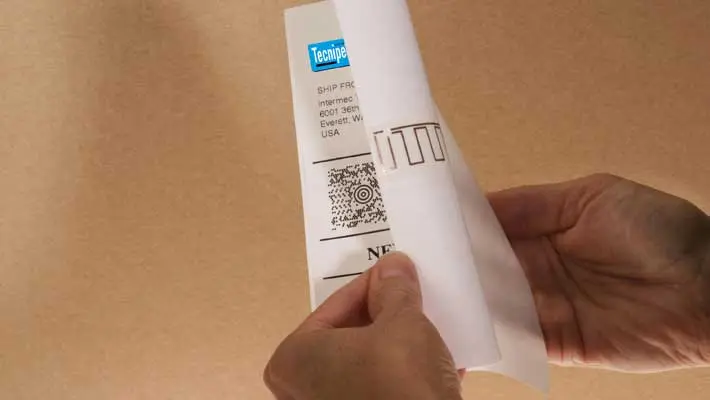
Although the RFID chip can contain all the necessary information to identify a product, it may be necessary to identify the item visually or via a barcode reader.
In such cases, we recommend working with printed RFID labels and creating a custom label using software such as BarTender.
However, there are other uses for RFID chips that do not require a printed paper label. In those instances, the chip can be soldered, sewn, attached with a cable tie, or even embedded inside the product being identified.
First, you must analyse the surface or product that needs to be identified via RFID. If you are dealing with cardboard or plastic boxes, you should opt for printed RFID labels. In this case, you must choose a material (paper, thermal, or synthetic) and an adhesive suited to the application. When printing labels, it is important to select the adhesive carefully, taking into account the surface material and its texture to ensure proper adhesion.
If the surface prevents the adhesion of a printed label, or if you require a flexible chip, you must use a specific format that allows you to encapsulate and properly protect the chip—such as an RFID hard tag or cable tie. There are even instances where the chip is integrated directly inside the product.
RFID labels are the starting point, but for data capture to function, they form part of an integrated system. Simply put, this ecosystem consists of the labels themselves, readers with their antennas to communicate with them, and software that interprets the data and integrates it into your company management systems (WMS, ERP).
Each component must be selected carefully to ensure project success.
For a comprehensive overview of how we design and implement these end-to-end systems, we invite you to visit our RFID Technology Solutions page, where we detail how we manage projects from start to finish.
The primary difference lies in their power source.
- Passive tags: Do not have their own battery. They are activated by the energy received from the reader antenna. They are more cost-effective and have a very long service life, but their read range is shorter (ranging from centimetres to several metres). They are ideal for high-volume applications such as inventory control or logistics.
- Active tags: Feature an internal battery. They transmit their own signal, enabling much greater read ranges (up to 100 metres or more) and operation in more challenging environments. They are used for real-time tracking of high-value assets, such as vehicles or large containers in outdoor yards.
The choice between the two will depend on your project requirements, environment, and budget.
You may also be interested in
-
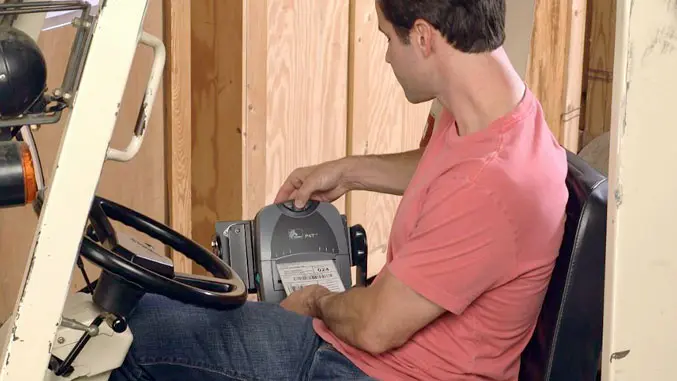
RFID Label Printers
Explore our range of inks, RFID labels, custom labels, and thermal transfer ribbons for professional printing equipment. -
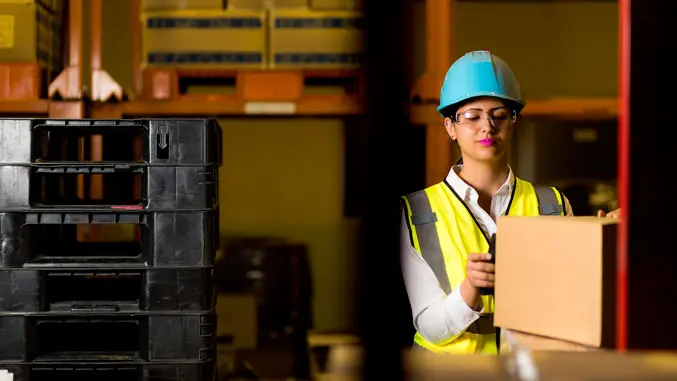
RFID Technology Solution
The RFID technology solution empowers you to bring intelligence and automation to your warehouse. Improve stock control, traceability, productivity, and warehouse efficiency. -

BarTender Label Software
BarTender enables you to design professional labels. Check the features of the Professional, Automation, and Enterprise editions.